Running Efficiency and Injury Prevention: Frontal Plane Focus
Why improving efficiency is often a better injury strategy than fixing ‘bad form.’
Écrit par Ken
Pas de spam. Désabonnez-vous à tout moment.
Partager cet article
Introduction
Running offers tremendous health benefits but carries an inherent risk of injury—especially when biomechanical inefficiencies go unchecked. Many runners focus solely on sagittal plane mechanics, but the often-overlooked frontal plane plays a vital role in both running economy and injury prevention.
Understanding the Frontal Plane
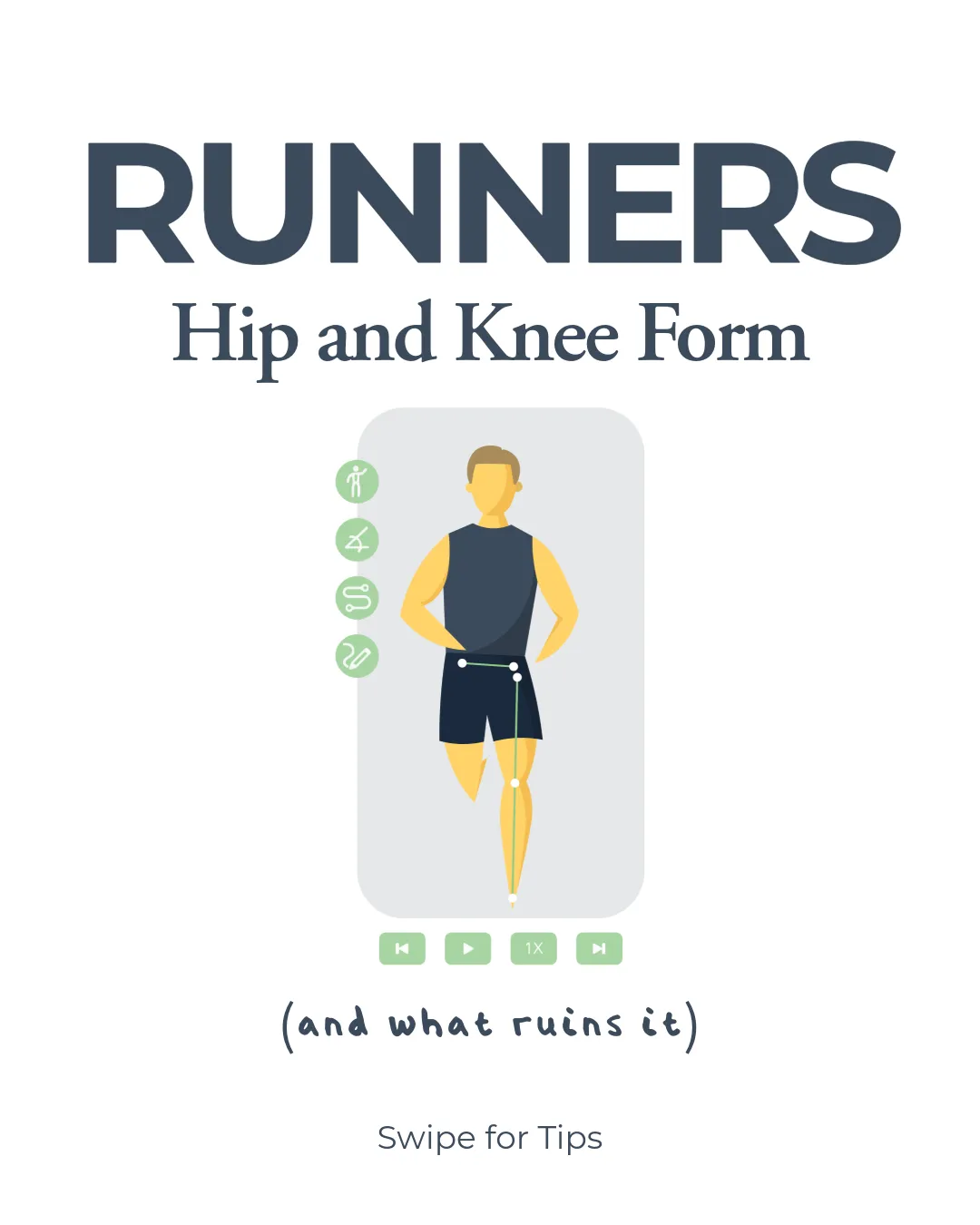
The frontal plane represents side-to-side movement, visible when observing a runner head-on. Misalignment in this plane is a major contributor to injuries such as knee valgus, hip drop, and lateral trunk sway.

Small imbalances in the frontal plane can cause cascading issues throughout the kinetic chain. Addressing this area can dramatically improve both performance and longevity.
Common Injuries from Frontal Plane Dysfunction
Knee Valgus: The inward collapse of the knees increases stress on ligaments and the patellofemoral joint, raising the risk of ACL tears and chronic knee pain.
Pelvic Drop: This is usually caused by weak glutes or hip abductors. It destabilizes the hips and alters spine alignment, contributing to back pain.
Lateral Trunk Sway: Excessive side-to-side upper body movement wastes energy and increases spinal strain.

Key Biomechanical Factors
Addressing frontal plane efficiency involves focusing on the alignment and movement of the hips and knees, stride mechanics, and overall posture.

Hip Position: Hips should remain level during the stance phase. Weak glutes often result in a noticeable drop on the non-stance side, affecting the lower back and knee mechanics.
Knee Position: The knees should track over the toes with each stride. Inward collapse (valgus) is often due to underactive glutes and poor core stability.
Overstriding and Crossover Gait
Overstriding—where the foot lands far in front of the center of mass—leads to high impact forces, inefficient gait, and increased injury risk. It also exaggerates hip instability.

Crossover Step: Occurs when feet land too close to or cross the body’s midline. This limits force distribution, increases fatigue, and may lead to IT band syndrome.

Performance & Injury Prevention Strategies
- Strengthen the glutes, hip abductors, and core muscles
- Maintain proper hip and knee alignment throughout the gait cycle
- Avoid crossover steps with a slightly wider foot placement
- Use drills to reinforce midline posture and reduce trunk sway
- Improve cadence to reduce ground contact time and impact forces
Conclusion
Frontal plane efficiency is often underestimated but critically important. By addressing pelvic drop, knee valgus, and trunk sway, runners can build a more stable, efficient stride that promotes longevity and performance.
Investing in proper mechanics now helps prevent common injuries and paves the way for more efficient, enjoyable running.